Saturday, March 5, 2016

Week in Review--Dr. Seuss!


Reading:

Our CAFE strategies this week were review comprehension strategies, but we had an Accuracy focus strategy this week called “Flip the Sound”. Our word family this week was the -ake family. The “e” at the end of the words is a bossy E where it tells the vowel in the middle to say its name and not its sound...which in turn means to “flip the sound”. Have you ever taught your child a rule from the English language to then have them point out an example where it doesn’t work? Many words in the English language don’t follow basic phonics rules. For example, children learn that ch makes the /ch/ sound we hear in chip. However, this rule does not apply when decoding the word school. Children need to be given tools to use when reading so they are not stumped when common rules don’t apply. Flip the sound is a strategy good readers use when they come to a word that doesn’t sound right or make sense. Knowing the multiple sounds a letter or letter combination can make and being able to flip the sounds around is an essential skill.


How can you help your child with this strategy at home?


1. When your child reads a word incorrectly, wait until he/she gets to the end of the sentence. Then, stop your child and ask, “Did the word you just read sound right?” Put your hand palm-down and flip your hand over while saying, “Try flipping the sound.”
 
2. Remind your child that when good readers use the strategy of flip the sound, they listen for a word they recognize. They then check to make sure that word makes sense in the sentence.
 
3. When sounding out words, review the different sounds letters make. Ask your child, “What other sound could that letter make?” Encourage your child to use the strategy of flip the sound to try different words until he/she is successful.
 
4. If your child is still struggling with this strategy, give your child the kinesthetic prompt of flipping over your hand as a quiet reminder to try the strategy.
 
5. This strategy can be compared to the strategy of cross checking. Remind your child to look at the word and ask, “Does it look right, does it sound right, does it make sense?” If it doesn’t sound right, they will then know to flip the sound and try again

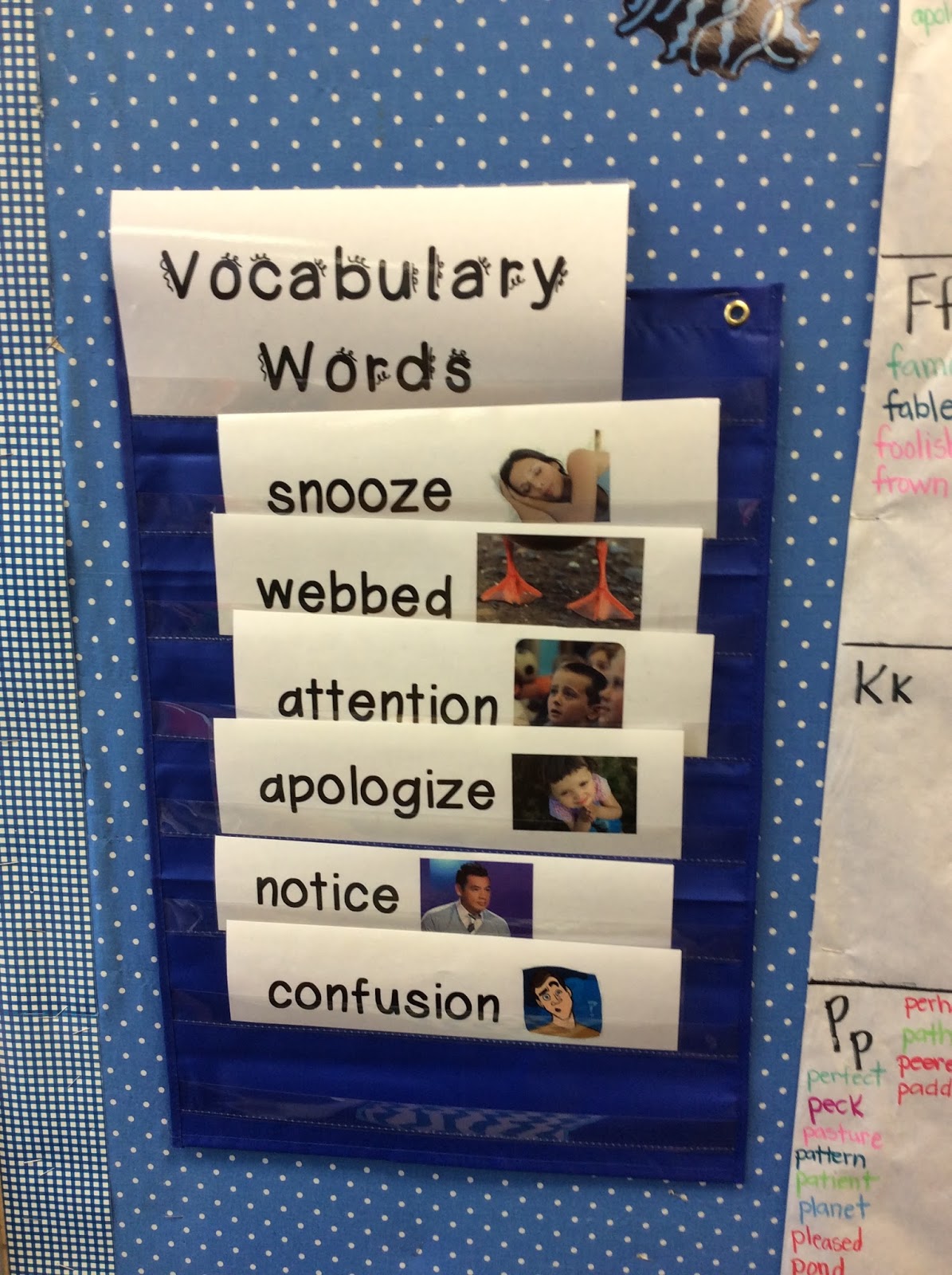


Our vocabulary words this week were:

  • apologize
  • confusion
  • snooze
  • webbed
  • attention
  • notice


We loved the book that went with the words this week and we focused on the word “apologize” later in the week. A few videos below show students practicing the word apologize with a partner.


Writing:
 
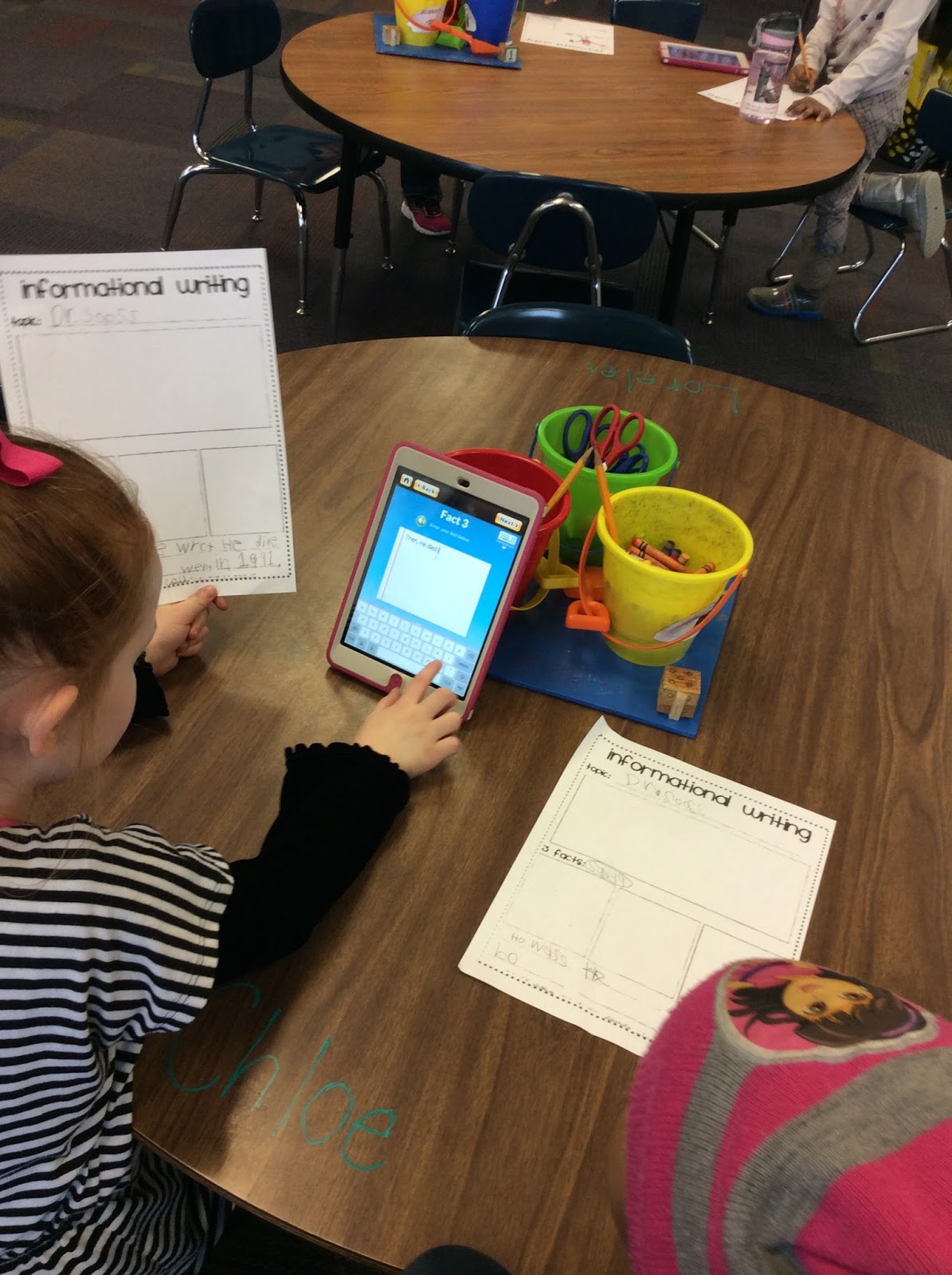
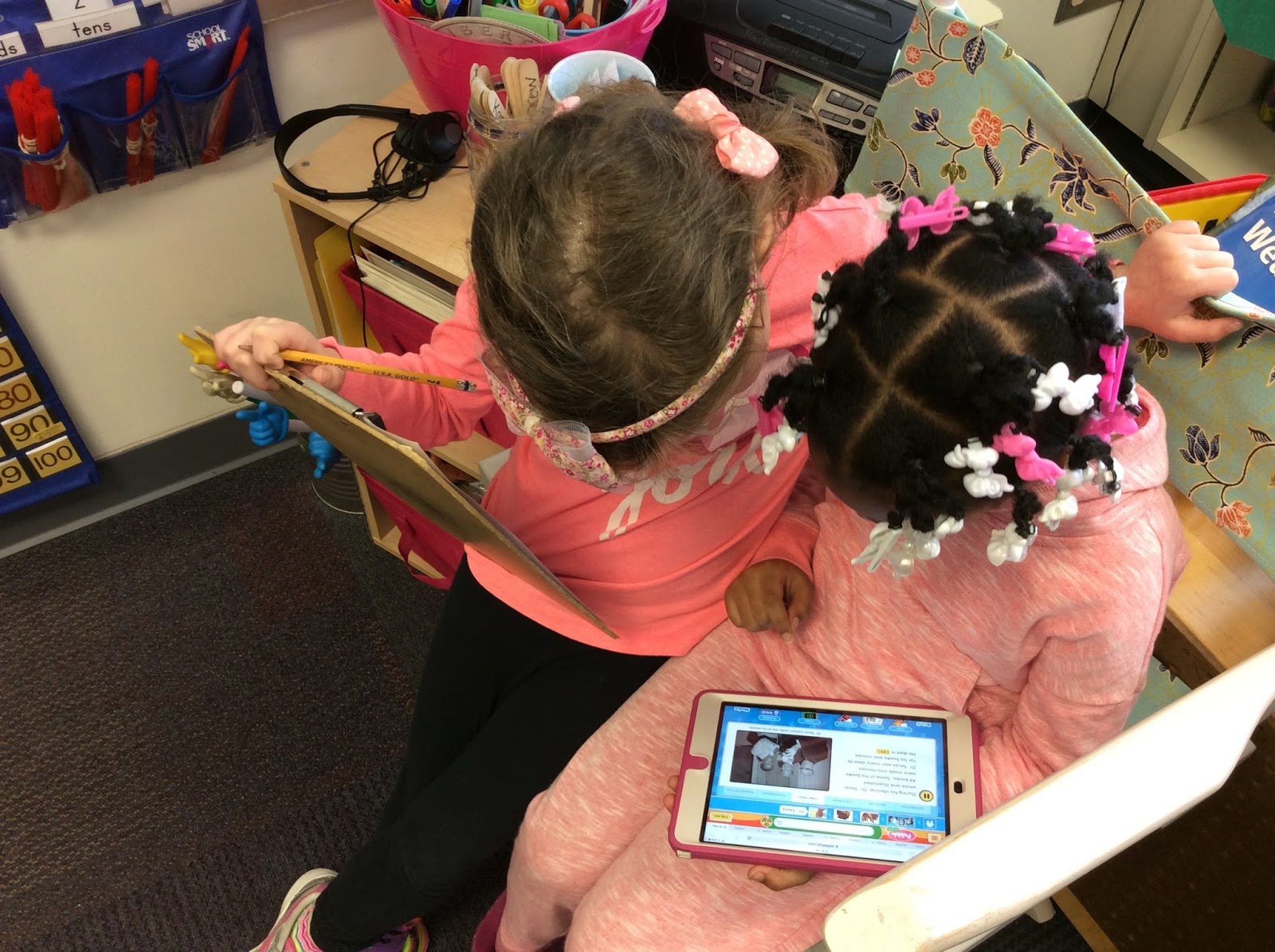
We continued to finish publishing our Pebble Go informational writing pieces by putting them into Book Creator. The class learned several fascinating facts about each of the animals they chose. We continued to use Pebble Go this week during our writing time by listening to a biography about Dr. Seuss. After we learned at least 3 facts about him, we completed a planning page to write down those facts and then entered them into a writing app called Write to the Core. This app allowed us to take a picture of our topic and write the sentences. After writing the sentences, it put them together on one page! We saved the writing as a photo and shared it to Google Classroom. A few examples of both the Pebble Go informational animal writing’s as well as the Dr. Seuss biographies are below!


Pebble Go Informational Writing Books


Math:

We reviewed previously taught skills this week. We focused on subtraction, greater than/less than/equal to and tens and ones. Students practiced each of these skills as a whole group, partner work and individually. I began testing these skills for the report card this week as well.

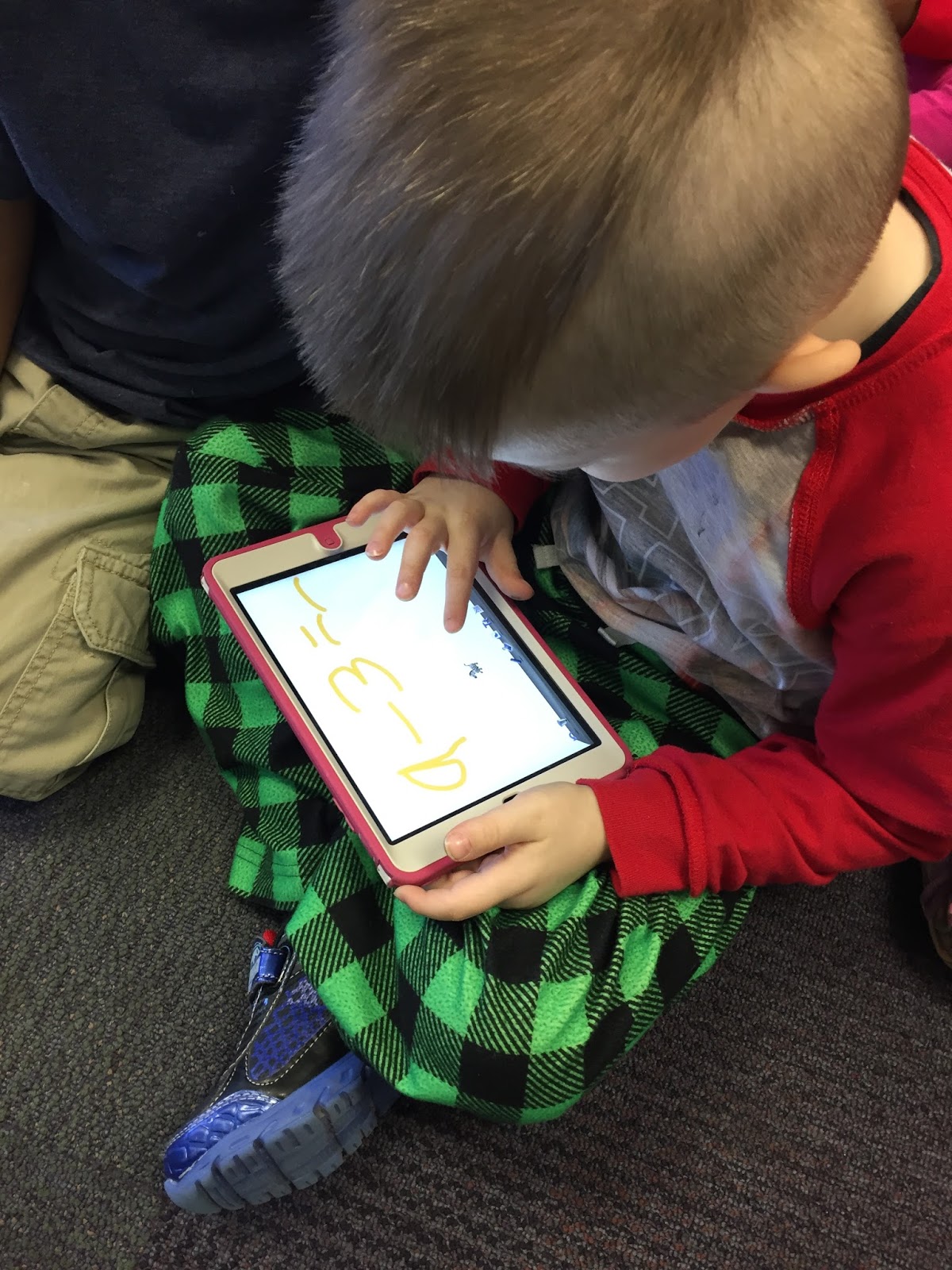

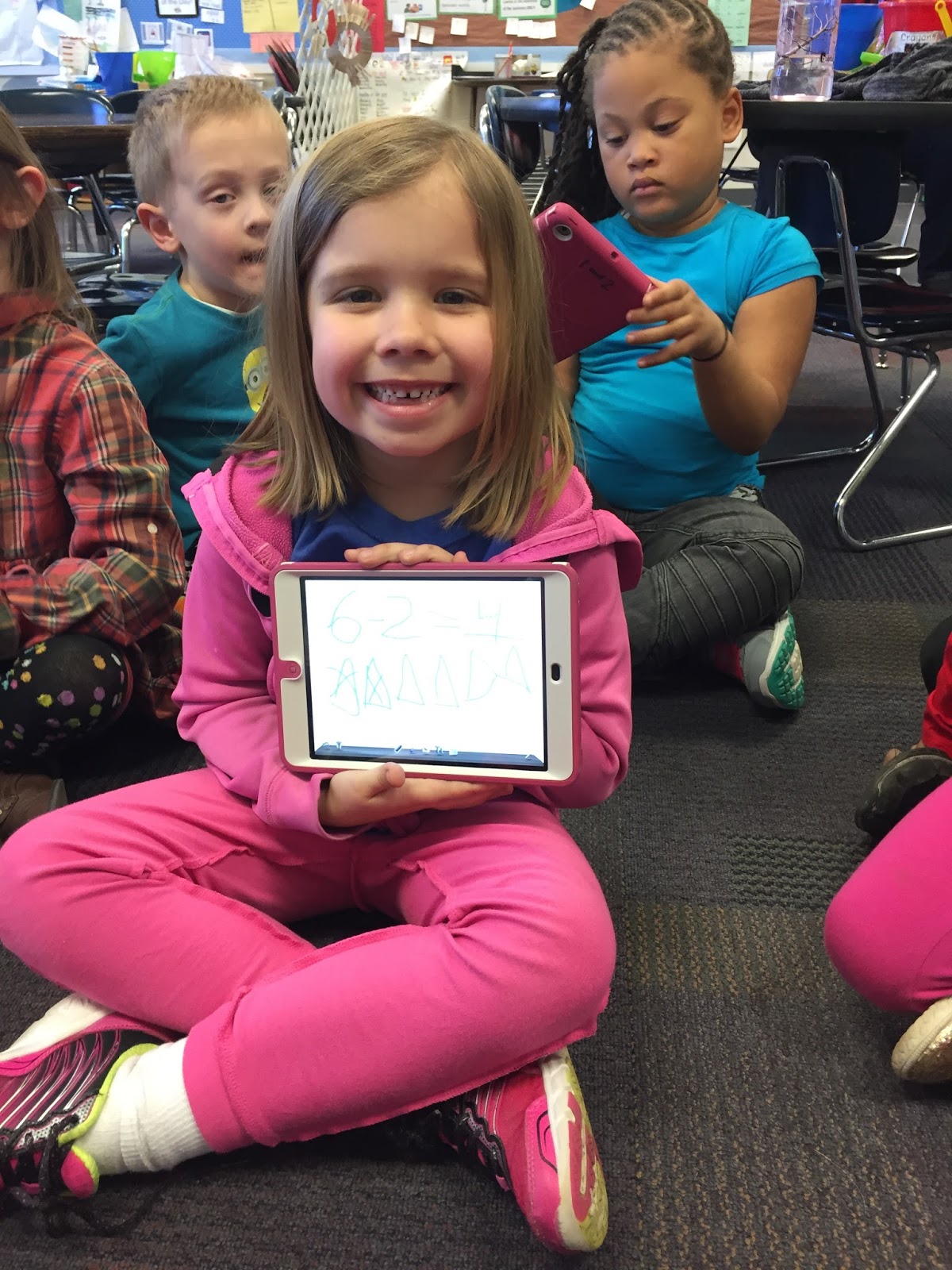


Our math vocabulary word(s) this week were review words from the previous weeks. We focused on “subtraction, minus, tens, ones and greater than, less than and equal to”.
 
Content:
 
This week was all about the author Dr. Seuss! We had so, so, SO much fun learning about him, reading his books, writing out him and more! Each day we focused on a different book and even had a theme to go along with it!

  • Monday we brought a stuffed animal to school and read the story If I Ran the Zoo.
  • Tuesday, we wore pajamas and read the story Dr. Seuss’s Sleep Book.
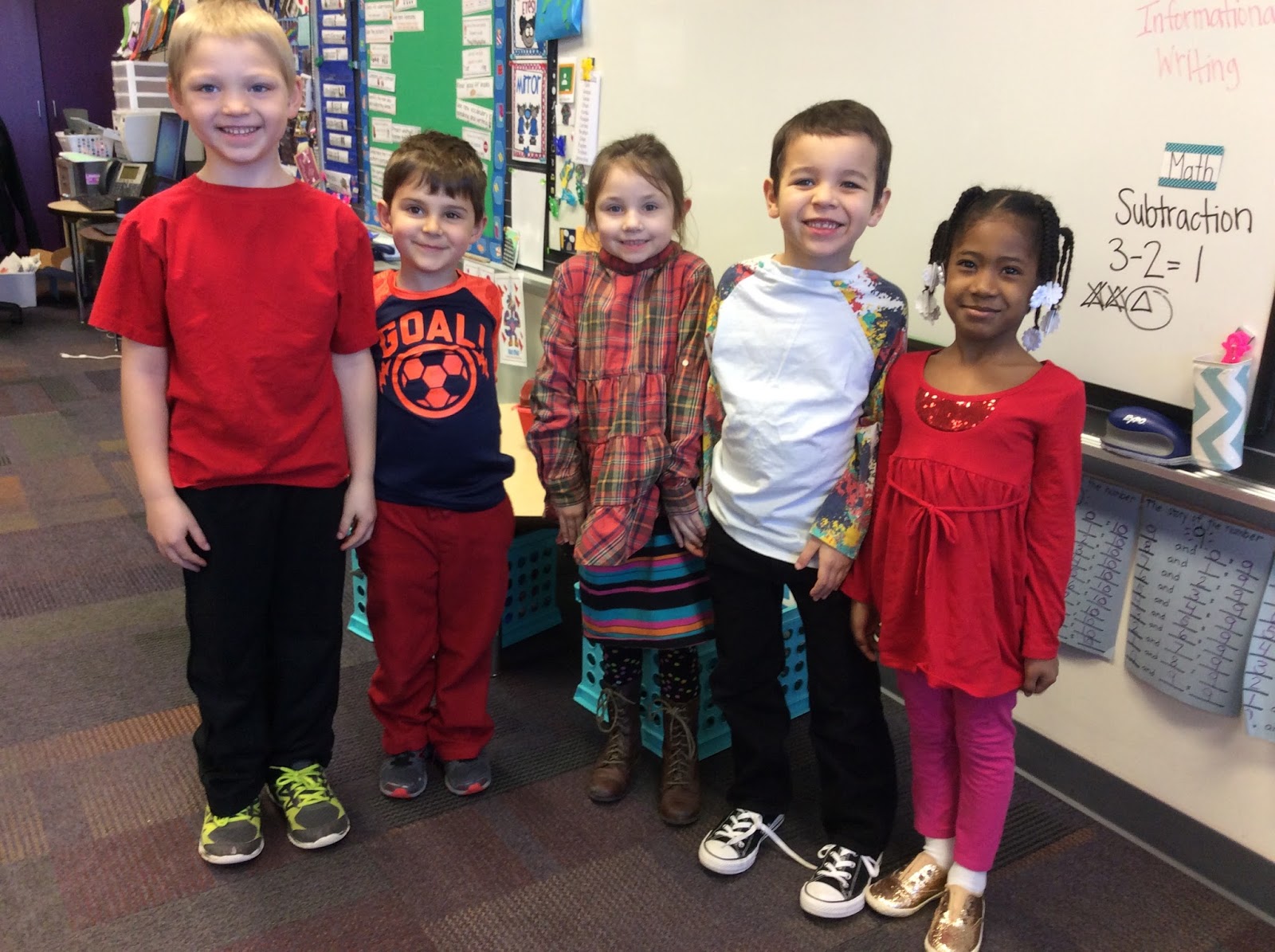
  • Wednesday, we wore mismatched clothes and read the story Wacky Wednesday.
  • Thursday, we wore crazy socks and shoes and read the story Fox in Socks and The Foot Book.
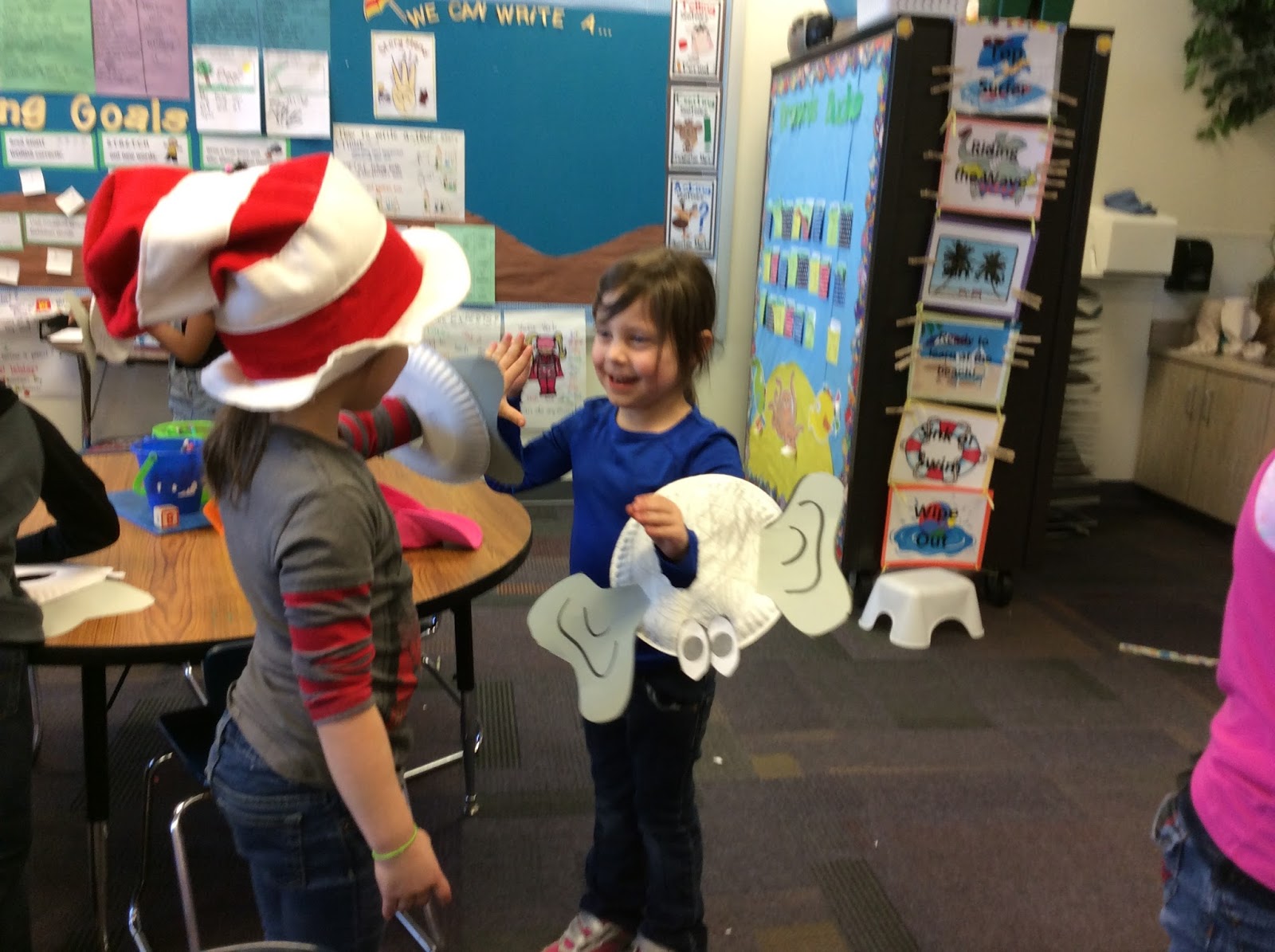
  • Friday, we wore hats to school and celebrated the story The Cat in the Hat. Later that afternoon, we also learned about Horton Hears a Who and practiced saying kind words with a Horton craft!


Below are SEVERAL pictures and videos from our fun filled week!


PRACTICE AT HOME:
Practice rhyming words at home! You say one word in a word family or another word that could have a word that rhymes with it. The words the student comes up with can be real words or nonsense words. Try this saying " I say 'cat' you say 'rat', 'cat'--'rat'." and so on through several different words. A few we have studied so far are the -at, -og, -am, -ig, -ot, -op, -ake and several others.

Next Week:
  • In reading we will focus on how characters change throughout a story.
  • In writing we will finish up our unit on Informational Writing and begin weather reports.
  • In math we will continue to focus on reviewing all 3rd nine weeks skills.
  • Our theme next week is all about WEATHER!
  
Important Dates/Information:
  • 3/15 and 3/17 Parent/Teacher Conferences--please return the day/time green paper I sent home confirming your conference
  • 3/18 3rd Nine Weeks Awards Ceremony 2:00PM
  • 3/ 21-3/25 NO SCHOOL SPRING BREAK
  • 4/8 Spring Pictures
  • 4/29 Spring Carnival
  • 5/5 Muffins for Mom
  • 5/10 Field Trip to Indy Zoo


Saturday, February 27, 2016

Week in Review--Fairy Tales

Reading:
 
This week our strategy was "Recognize and Explain Cause and Effect Relationships". Understanding cause.and.effect relationships is a basic thinking skill. It is a strategy used by readers to understand why things happen the way they do in the text. Students are taught to look for clue words that will assist them in determining the cause and effect of the events in the text. It is a strategy that is not only used in reading, but it is experienced in day to day life. Readers who recognize cause.and.effect relationships understand that in.text events happen (effects), along with the reason why they happen (causes). When students recognize this relationship, comprehension is increased.
 
How can you help your child with this strategy at home?
 
  1. Encourage your child to look for clue words when reading. These clue words include: because, if, then, since, so, therefore, & as a result of.
  2.  When reading with your child, show examples of cause.and.effect relationships in the text. This modeling is essential to understanding.
  3. Spark conversation about the text by using the following questions:
    • What happened and why did it happen?
    • What were the clue words?
    • Why would this have happened?
    • Give examples of cause.and.effect relationships throughout your life. in your family, in sports, and in your friendships
This week we also focused on words in the -ip and -et families. We played rhyming games, created words and went on our word hunt.


During Daily 5 iPad choices this week students created a picture/video using ChatterKid where they used a picture of the Big Bad Wolf and created a sentence where if they were the Big Bad Wolf what they would "huff and puff and blow down".


Writing:
 
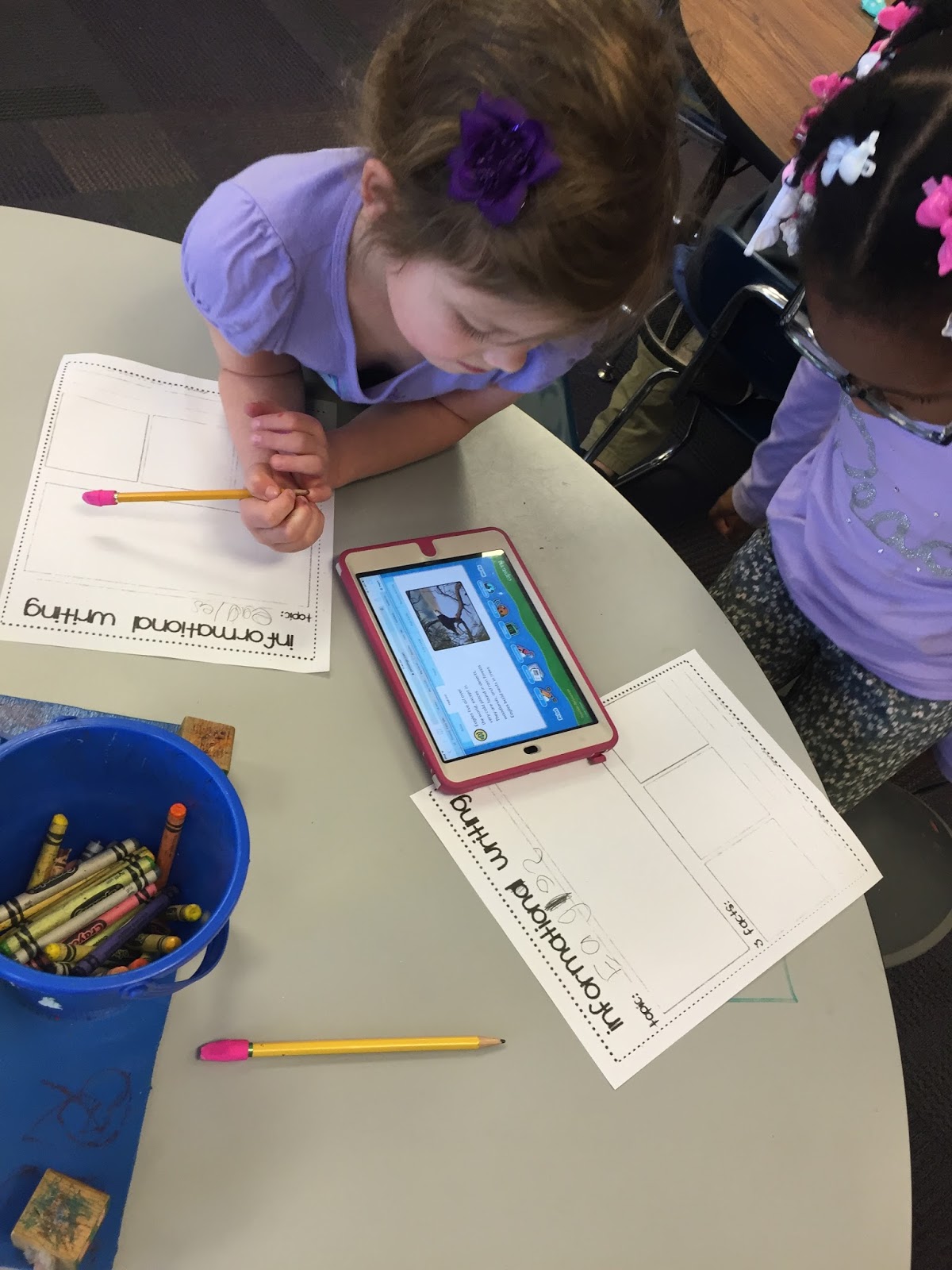
This week in writing we continued to work on writing informational writing pieces. To change things up this week, we used a website/app on our iPads called Pebble Go. The students worked with their iPad partner and navigated through the website to choose an animal to listen, read and learn more about. They completed the informational writing page with their partner by adding the topic and three facts they learned about the animal. After the planning page, they turned their ideas into a book and then published their finished book using Book Creator. A few students are continuing to work on their writing piece into this next week. A few completed books from previous weeks are below. 


Math:
 
This week in math we focused on the concepts "Greater Than >, Less Than < and Equal To =". We mainly focused on comparing sets and using these words as vocabulary to describe the relation between the different sets of objects. Due to our shortened week, we will continue to work on this into next week.
 
During our iPad choices, we practiced scanning QR codes that told us a number 1-20 and then created that number using the Number Pieces app. We showed the number using the number pieces and then wrote the number next to the pieces. The main focus is using the tens and ones to show the number.


Content:
 
This week was all about Fairy Tales! We read and listened to so many stories! A few of them were The Three Little Pigs, Little Red Riding Hood, Goldilocks and the Three Bears, Cinderella, Rapunzel, Beauty and the Beast, Jack and the Beanstalk and more! We enjoyed hearing these stories and finding all the parts that make a fairy tale in each of them. We even had the chance to write our own fairy tale by the end of the week. We used a planning page to help us plan out the parts of a fairy tale, chose our favorite parts and put together a story. We put the final product together in Book Creator. We even drew and painted our very own castle this week too!


Our very own Fairy Tale...
The Lost iPad Partners!


We finished our week off by dressing up and having our very own Fairy Tale Ball! We learned how to bow and curtsy, how to box step, do the grapevine and even ride on a magic carpet ride. After the Ball we went on a parade around the school and waved to our royal subjects, all of the teachers and students 1st through 5th grade!


PRACTICE AT HOME:
Talk with your child about your favorite childhood fairy tales and what their favorites are now. Compare and contrast your favorites and see if they have all of the elements of a true fairy tale. Look at the picture posted above to see all of those elements!

Next Week:
  • In reading we will focus on Author's Purpose and Main Idea and Key Details.
  • In writing we will continue our unit on informational writing pieces.
  • In math we will continue to focus on Greater Than, Less Than, Subtraction and Tens/One.
  • Our theme next week is all about Dr Seuss. Be sure to read the YELLOW paper that was sent home on Friday. for our Dr. Seuss week spirit days!
  
Important Dates/Information:
     
  • 2/29 ABC's of Ag Field Trip to McCutcheon High School (AM only)
    • This date was moved due to our snow day last week
     
  • 3/15 and 3/17 Parent/Teacher Conferences--please return the day/time green paper I sent home confirming your conference
  • 3/ 21-3/25 NO SCHOOL SPRING BREAK


Saturday, February 20, 2016

Week in Review--American Symbols & Presidents

Reading:

This week was focused around the reading strategy “Read With Expression”. Reading the text smoothly and with expression is a Common Core State Standard for all grade levels. When I teach this strategy I focus on teaching the kids that when they read, they should sound like a “story teller”. When you read a story out loud to others, you want to sound like a storyteller and not boring, too quiet or like a robot. Of course, if the character is a robot then that would be perfect! Recording a student’s reading of a text is an easy way for them to hear themselves as a reader. The student can read the text into a recording device and then listen to themselves. The student can record over his or her voice if they feel they can do a better job of conveying the author’s meaning or feeling. By listening to themselves, they will begin to understand how to better adjust their voice to convey the appropriate meaning and feeling.

This week we also focused on the “-it and -in” word families. We created word family lists, played a game called a word hunt and added the new words into our Friday game of SNAP!


Our vocabulary words this week were:
  • peered
  • glided
  • paddle
  • canoe
  • dew
  • crew

We enjoyed learning about these words and created one page of a book with our iPad partner. We used three specific words “peered, glided, paddle” and the pairs took a picture of the word and then acted the word out in a video. A few of the students told the definition while acting it out and others just acted it out. A few also included a drawing of the word! We put the pages together, watch the video below!

 
 POEM OF THE WEEK (I recorded it upside down, so sorry!)


Writing:

We are continuing to work on informational writing. This week we started off the week by learning what words always get a capital letter. We focused on names of people, names of places, names of pets, holidays, days of the week, months of the year and the word “I” are always capitalized.
 
We continued on the rest of the week by looking at mentor non-fiction texts to learn how an author writes informational pieces. We took facts that we learned from the books we read and put them into our informational books about the topic. We are not all finished with the books, but when we are finished we will publish them in Book Creator!


Math:
We continued to focus on subtraction this week. We learned how we can use a number line and a drawing to help solve subtraction problems. We practiced as a group this week using these two strategies and will put them into choices next week to practice on our own, with a partner and using the iPad.

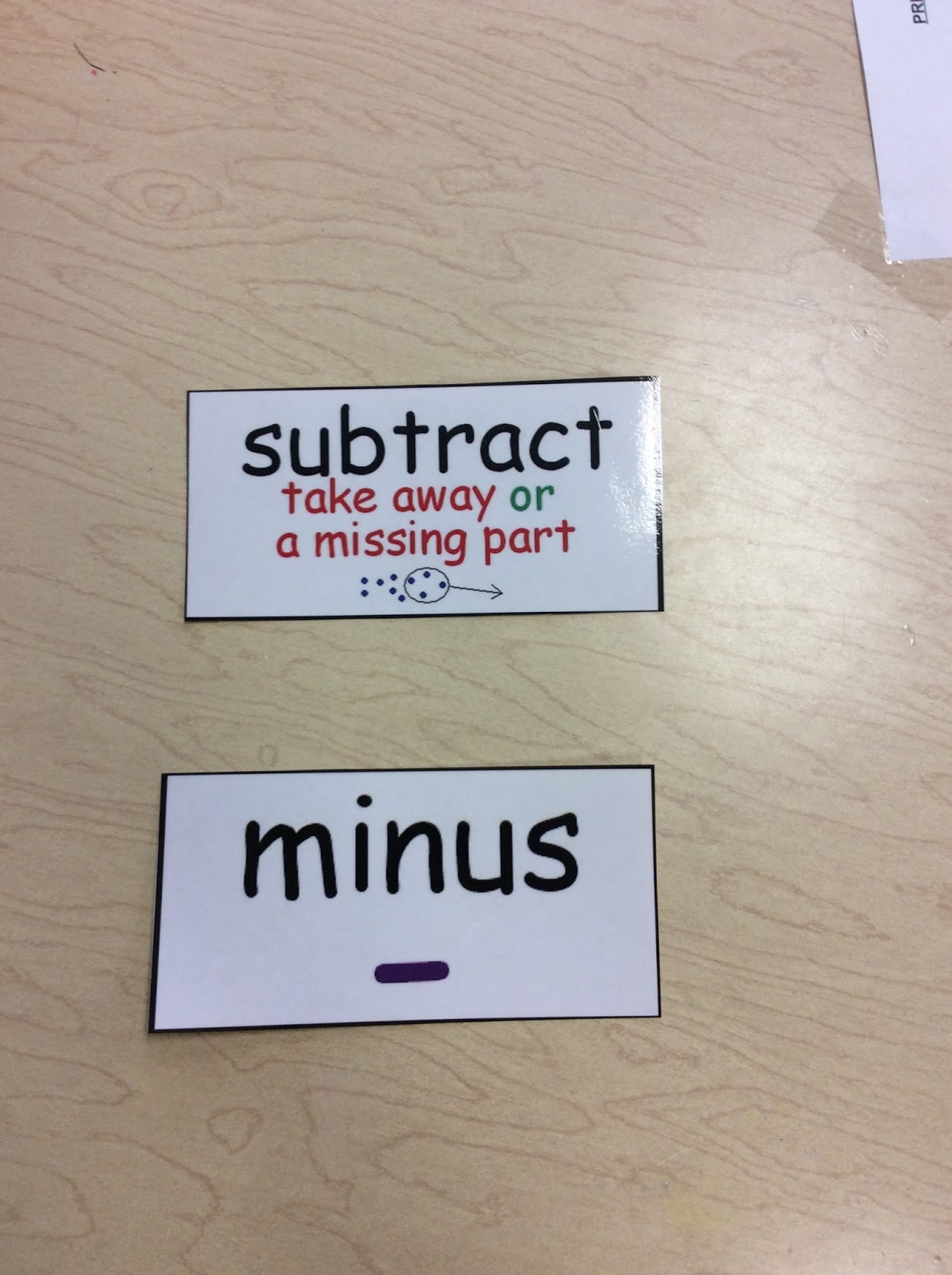
Our math vocabulary word(s) this week focused on subtraction. They were “subtract” and “minus”. We discussed the words, then we wrote and drew pictures that showed what the words mean in our math journals. 


Content:

This week was all about American Symbols and Presidents. We took each day this week to learn about a different important symbol to our country. We learned about our American Flag, the Liberty Bell, the Bald Eagle and Presidents George Washington and Abraham Lincoln. I loved seeing how excited the students were to hear about the importance of each symbol and the lives of both Presidents.


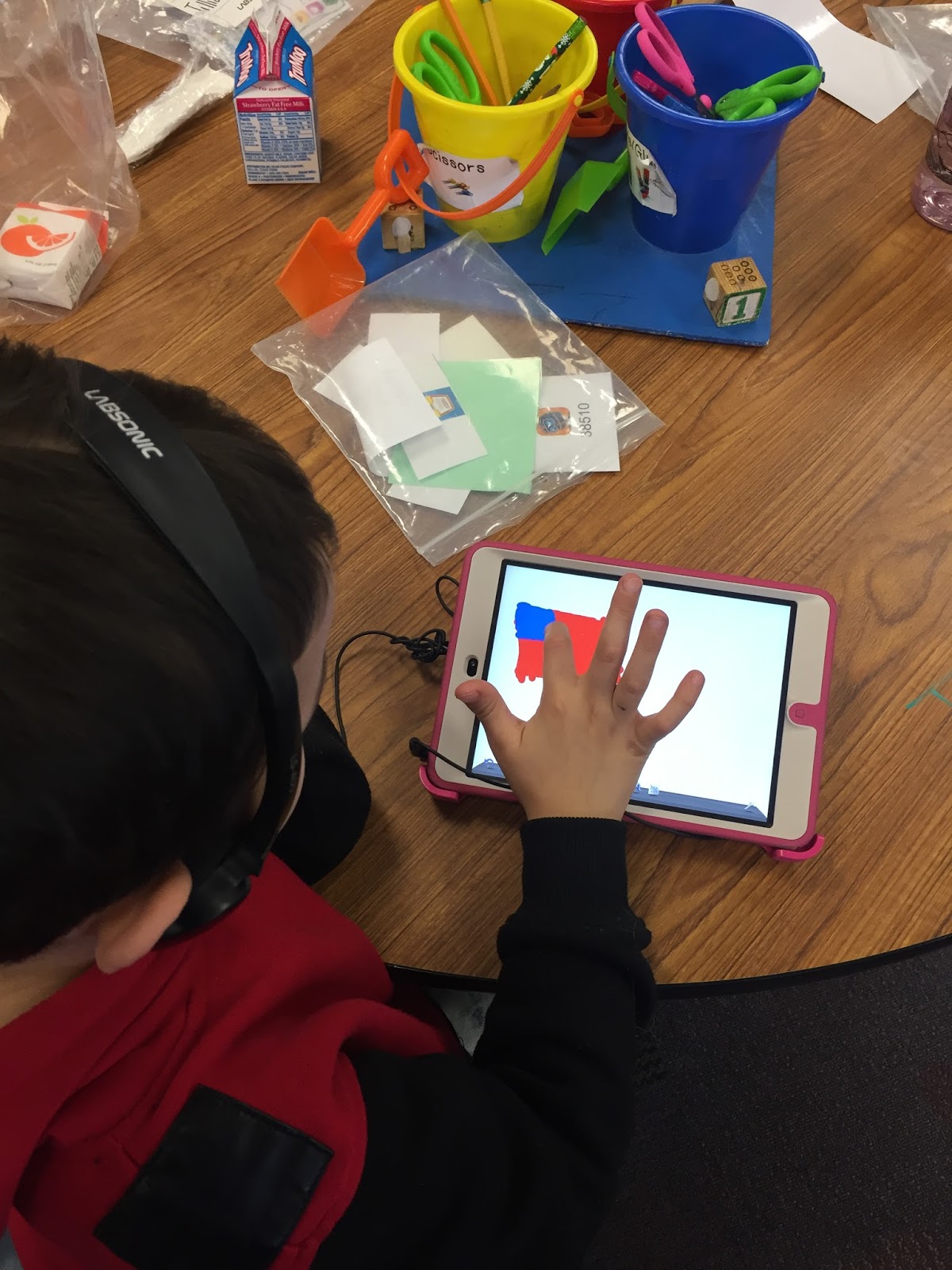
For morning work this week students scanned QR codes that connected to videos teaching about American Symbols, Washington and Lincoln. After they watched a video, they went to the app Doodle Buddy and drew a picture about something they learned from the video.


We also took pictures pretending to be both of the two important Presidents that we studied this week and we wrote a one page writing about what we would do if we were the President. Watch the video below!

If I Were President...


PRACTICE AT HOME:
Practice reading with AND without expression. Have your child determine the level of your expression. We used a thumbs up for good expression, thumbs sideways for "so-so" and thumbs down for not so great expression. They were great at helping me with my reading this week! Then, turn the tables and your child practice reading a favorite book with good expression! 

Next Week:
  • In reading we will focus on Recognize Cause & Effect.
  • In writing we will continue our unit on informational writing pieces.
  • In math we will continue to focus on Greater Than, Less Than.
  • Our theme next week is all about Fairy Tales.
  
Important Dates/Information:
     
  • 2/25 ABC's of Ag Field Trip to McCutcheon High School (AM only)

  • 2/26 Fairy Tale Ball (dress like your favorite fairy tale character or super hero)

  • 2/26 K-2 Movie Matinee
  • 3/15 and 3/17 Parent/Teacher Conferences (please return your day/time requests ASAP)
  • 3/ 21-3/25 NO SCHOOL SPRING BREAK